Water heater replacement: what drives the cost
The heater is a known price. The quote moves on what the installation needs to meet today's code, and on whether you are changing type.
Call (844) 213-2829Connects you with a local plumbing provider
Calls are answered by an independent provider that serves your ZIP code. You decide whether to hire.
The short version
- What sets the price
- Tank or tankless, gas or electric, size, and code upgrades.
- Like for like
- Replacing the same type and size in the same spot is the simplest job.
- Ask first
- What code items the installer expects to add.
A quote should spell out
- The brand, model, size and fuel.
- Removal and disposal of the old heater.
- Code items such as an expansion tank, pan or venting.
- Who pulls the permit and books the inspection.
What pushes the price up
- Switching from a tank to tankless.
- A larger gas line or new venting.
- A new electrical circuit.
- Moving the heater to a new location.
The choices behind the price
- TankA storage tank is the lower-cost installation and the simplest swap.
- TanklessHeats water on demand. A gas tankless unit often needs a larger gas line and new venting, which is where the extra cost goes.
- TemperatureThe CPSC says a setting of 120 degrees Fahrenheit may be necessary to reduce or eliminate the risk of most tap water scald injuries.
- PermitWater heater replacement is permitted work in many cities. Our city guides name the office for each area.
How the job usually goes
- A visit or photos to check the existing installation.
- A written quote with the code items listed.
- The permit, then the old heater out and the new one in.
- Testing, temperature setting and the inspection.
This page gives no dollar figures on purpose. Type, fuel and code upgrades move the price too much for a national average to help. Ask two or three plumbers to quote the same scope.
Related guides
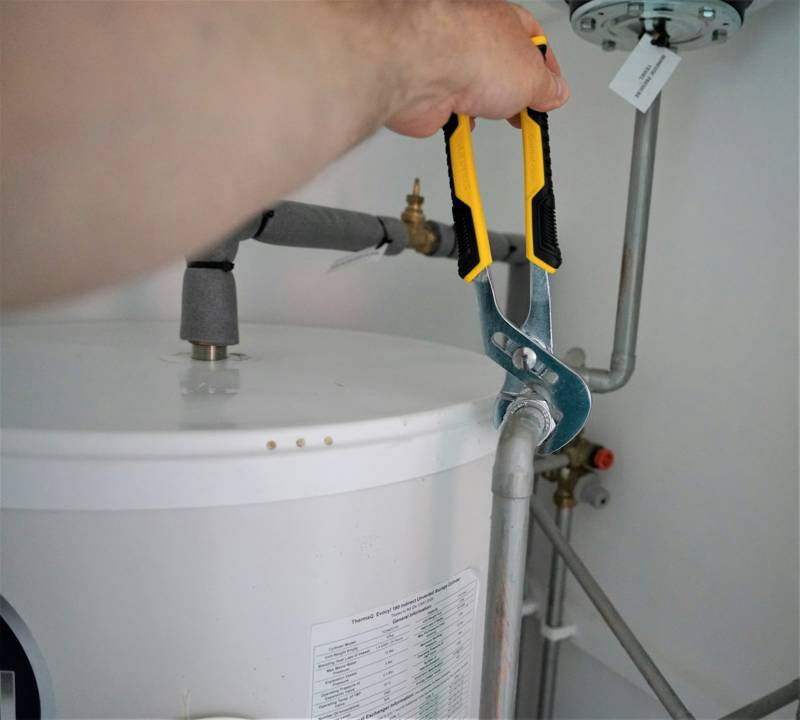 Water heater leaking
 Low water pressure in the house
Sources
- US Consumer Product Safety Commission: tap water scalds